
AI can help actors generate questions, obstacles and rehearsal variations. It becomes less useful when it starts deciding the character or writing the performance.
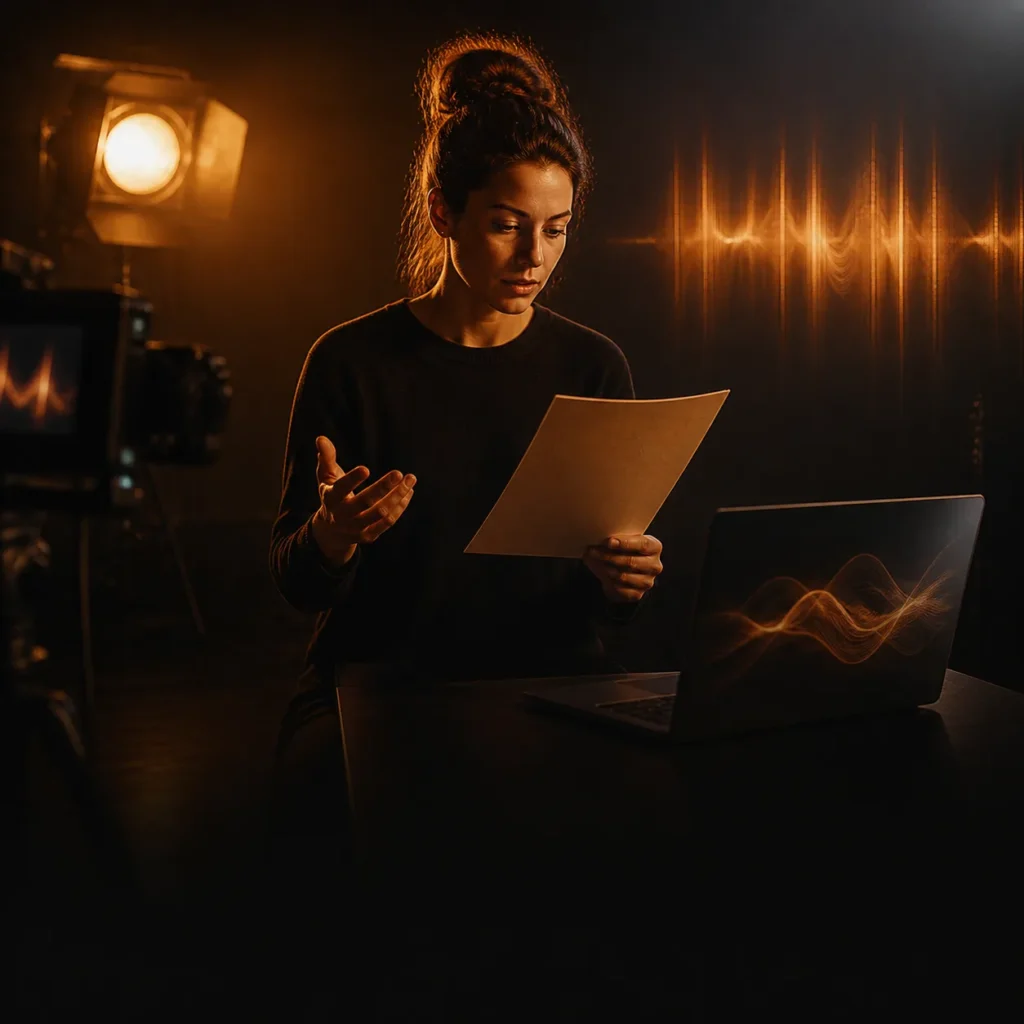
AI can be a useful rehearsal assistant. It can also produce a mountain of confident nonsense.
The difference usually comes down to the job you give it.
I use technology when it helps an actor practise more often, see the material from another angle or remove a practical barrier. I do not want it to decide how the character feels or provide a "winning" performance. That is the actor’s work.
Good jobs for an AI rehearsal tool
Generate questions, not answers
Paste a short scene and ask for ten questions about relationship, stakes, missing information and changes in tactic. Answer the questions yourself.
Create rehearsal obstacles
Ask for practical complications that fit the scene: the other person is late, a child is asleep nearby, you need to finish a task or you cannot let somebody hear.
Choose only ideas supported by the writing.
Test your understanding
Explain the scene in your own words and ask the tool to identify gaps or contradictions. Check its response against the script. AI can misread context, so you remain the editor.
Support line practice
Use text-to-speech or a dialogue tool as a reader when another person is unavailable. Vary the pace and leave enough room for genuine response.
Poor jobs for an AI rehearsal tool
Avoid asking, "How should I play this character?" The answer will often be a collection of general acting language that sounds certain but gives you nothing personal or playable.
Do not feed private information, confidential audition sides or unreleased scripts into a public tool unless you have permission and understand its data settings.
Do not use generated emotional stories as a substitute for safe, thoughtful character work.
Try this: the variation ladder
Choose one page of dialogue.
- Ask an AI tool for five possible obstacles that do not change the written facts.
- Reject at least three. This forces you to make editorial decisions.
- Rehearse the scene with the two remaining obstacles.
- Ask for five questions about the relationship, then answer them without AI.
- Record one final take with no generated prompt in front of you.
The technology opens options, but the final work belongs to your judgement and imagination.
Keep source material accurate
AI may invent industry facts, acting quotes or information about a production. Verify anything you plan to publish or rely on. This matters particularly when writing biographies, applications or articles.
The tool should disappear
The best rehearsal support leaves you more connected to the scene. If you are thinking about the prompt, the app or the clever backstory while acting, it has become another distraction.
My interest in AI and acting is practical: can it help an actor rehearse consistently, learn lines securely and arrive with better questions? Used that way, it can be valuable.
The acting courses page includes my current training approach. You can also try A 30-Day Screen Acting Challenge Using Your Phone and AI.
Related Actors Insights
Continue learning
Questions or corrections? Contact Moore Acting Instinct.