
Actors can mistake anxiety for a stop sign. This personal and practical approach allows the sensations to exist while attention returns to the scene.
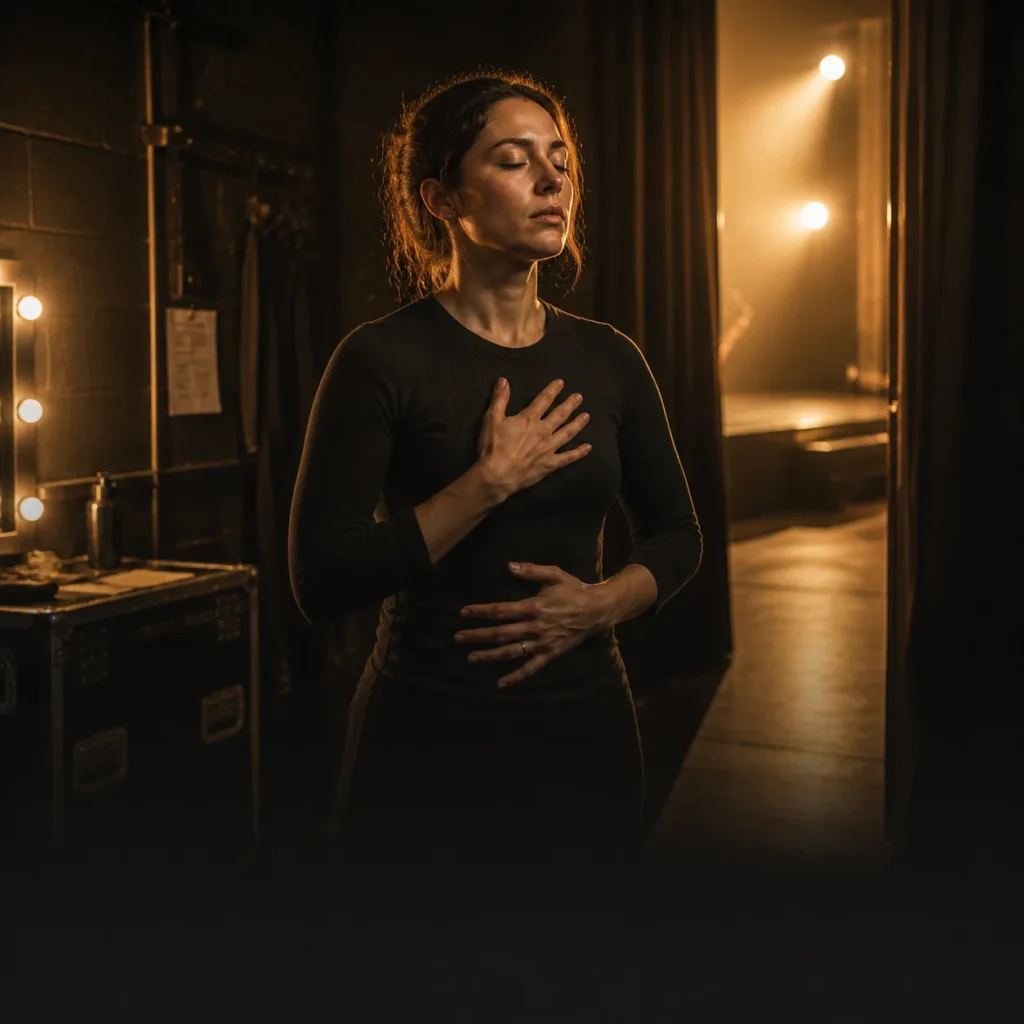
For a long time, I believed I had to get rid of anxiety before I could act well. That belief gave anxiety a powerful job: it decided when I was allowed to begin.
My experience changed when I stopped treating every sensation as an emergency. I could feel my heart race, notice the urge to escape and still take part in the scene.
This is a personal acting approach, not mental health treatment. Severe or persistent anxiety deserves support from a qualified health professional.
Calm is not the entry requirement
An actor may be shaky and connected, or calm and completely absent. The quality of the work depends less on the sensation and more on where attention goes next.
If your full attention is monitoring the body, there is little room for the other person. The goal is not to deny the feeling. It is to widen the frame.
"My chest is tight" can be true at the same time as "This person is about to leave and I need an answer."
Stop negotiating with the symptoms
Thoughts such as "I will start when my hands stop shaking" keep you in a waiting room. Begin with the symptoms present.
You can quietly name what is happening: warm face, quick breath, tense shoulders. Then name one fact in the scene and one action towards the other person.
This reduces the mystery without demanding that the body change immediately.
Try this: the anxiety-allowed take
Choose material you know well and work within a level of challenge that feels manageable.
- Before recording, write down the sensations you are willing to allow for the next minute.
- Say, "These can be here while I do the scene."
- Choose one external target, such as the reader’s eyes or the object they are holding.
- Record one take without restarting because of a symptom.
- Afterwards, note what you were still able to do: listen, remember, respond, finish.
The exercise builds evidence that discomfort and functioning can coexist.
Do not turn regulation into another performance
Breathing, movement and grounding can be helpful. Use them gently. If you begin checking whether the technique has "worked," you may return to monitoring yourself.
Let the tool support action, then put attention back on the circumstances.
Choose training that respects boundaries
Actors should be challenged, but emotional safety matters. You do not need to disclose private trauma or force overwhelming states to produce truthful work.
At Moore Acting Instinct, my aim is to build choice. An actor should know they can pause, adjust an exercise and return to the craft without being shamed.
Fear can come with you
The lesson I took from my own panic history was not that fear is secretly wonderful. It was that I did not have to organise my life around avoiding it.
On camera, that means I can stop asking whether I feel ready and ask what the scene requires now.
Read Audition Nerves: Give the Adrenaline a Job and Why Actors Lose Confidence After Training or Rejection for related work.
Related Actors Insights
Continue learning
Questions or corrections? Contact Moore Acting Instinct.