
When pressure rises, broad advice is hard to use. These three tools give actors a sensory target, a playable verb and a simple physical anchor.
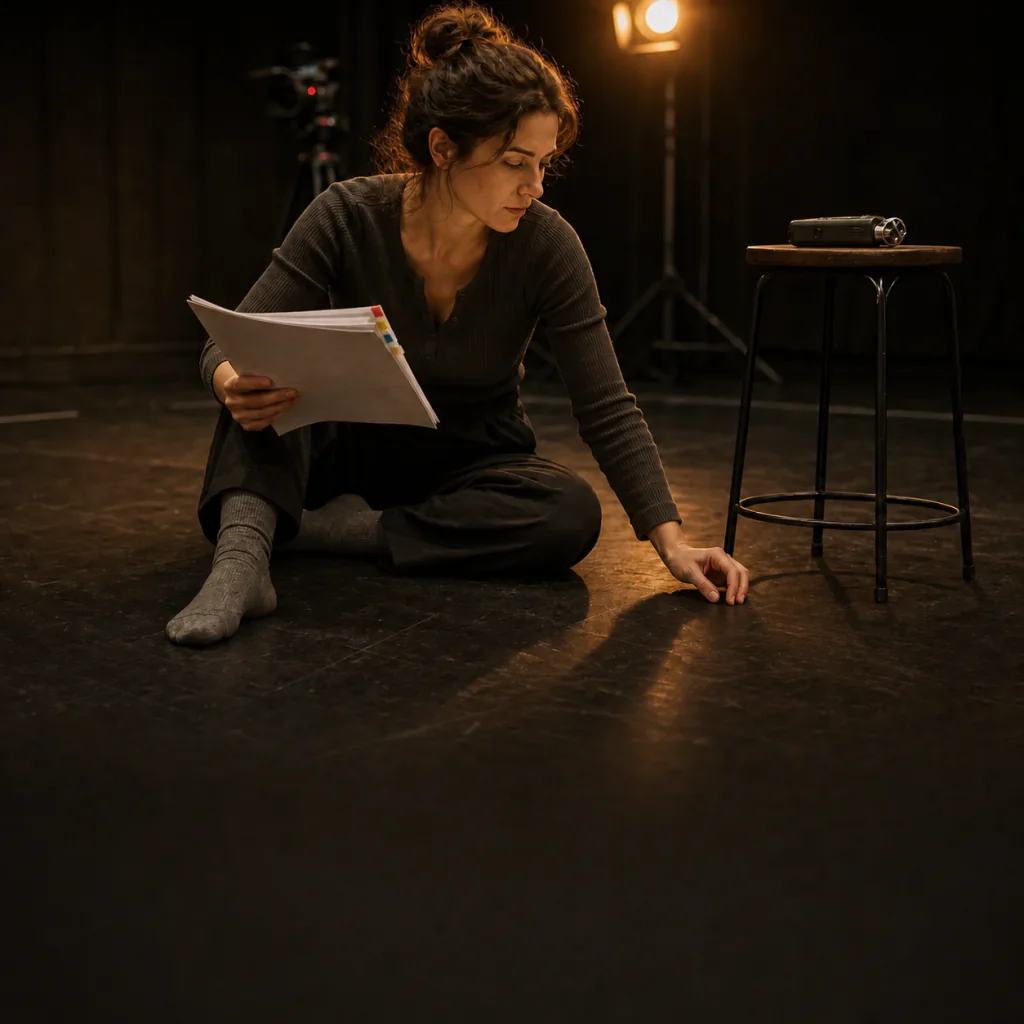
Under pressure, actors do not need twelve inspirational ideas. They need one or two instructions the body and imagination can actually use.
These are three tools I return to because they are simple, portable and connected to the scene.
Tool one: a sensory target
Choose one real detail to receive before the take. It may be the reader’s breath, the texture of an object, the temperature of the room or a sound in the distance.
This is not a relaxation exercise. It places attention in the present and gives the imaginary world something physical to attach to.
Once the scene begins, let the target go unless it remains relevant.
Tool two: a playable verb
Replace an emotional instruction with an action directed at the other person.
Instead of "be angry," try "corner them." Instead of "be vulnerable," try "make them stay." Instead of "be confident," try "settle their doubt."
A verb creates behaviour. Emotion may follow, but you are not waiting for it.
Tool three: a physical anchor
Choose a small action that belongs to the circumstances. Hold a document you cannot surrender, keep one hand on the back of a chair or continue packing while the other person tries to stop you.
The anchor gives nervous energy a route. It should never become a repetitive mannerism that competes with the dialogue.
Try this: the pressure triathlon
Use a short scene and record three takes.
- In take one, use only a sensory target.
- In take two, use only a playable verb.
- In take three, add a physical anchor and keep the strongest element from the earlier takes.
Before watching, write what each tool was meant to do. Then review whether it actually affected the relationship.
Keep the tool that creates clearer behaviour with less visible effort.
What to do when nothing works
Return to the basic facts. Where are you? What just happened? What do you need from this person now?
Actors sometimes reach for advanced techniques because the circumstances have become blurry. A simple fact can restore the scene faster than another layer of preparation.
Pressure changes what is available
A method that works in a quiet rehearsal may not survive a countdown, a new reader or a crowded set. That is why I like practising with controlled interruptions. Change the distance, add a time limit or ask the reader to alter pace.
The aim is not to make training stressful. It is to discover which tools remain useful when conditions change.
Choose fewer tools
Once the take begins, you should not be mentally reciting a checklist. Prepare the elements, select the most useful one and enter the scene.
For a recovery process between takes, read How Actors Can Recover Focus After a Bad Take. For structured practice, see A 20-Minute Acting Routine for Busy Performers.
Related Actors Insights
Continue learning
Questions or corrections? Contact Moore Acting Instinct.