
Screen presence often improves when an actor stops adding expression and starts allowing specific thoughts, sounds and changes to register naturally.
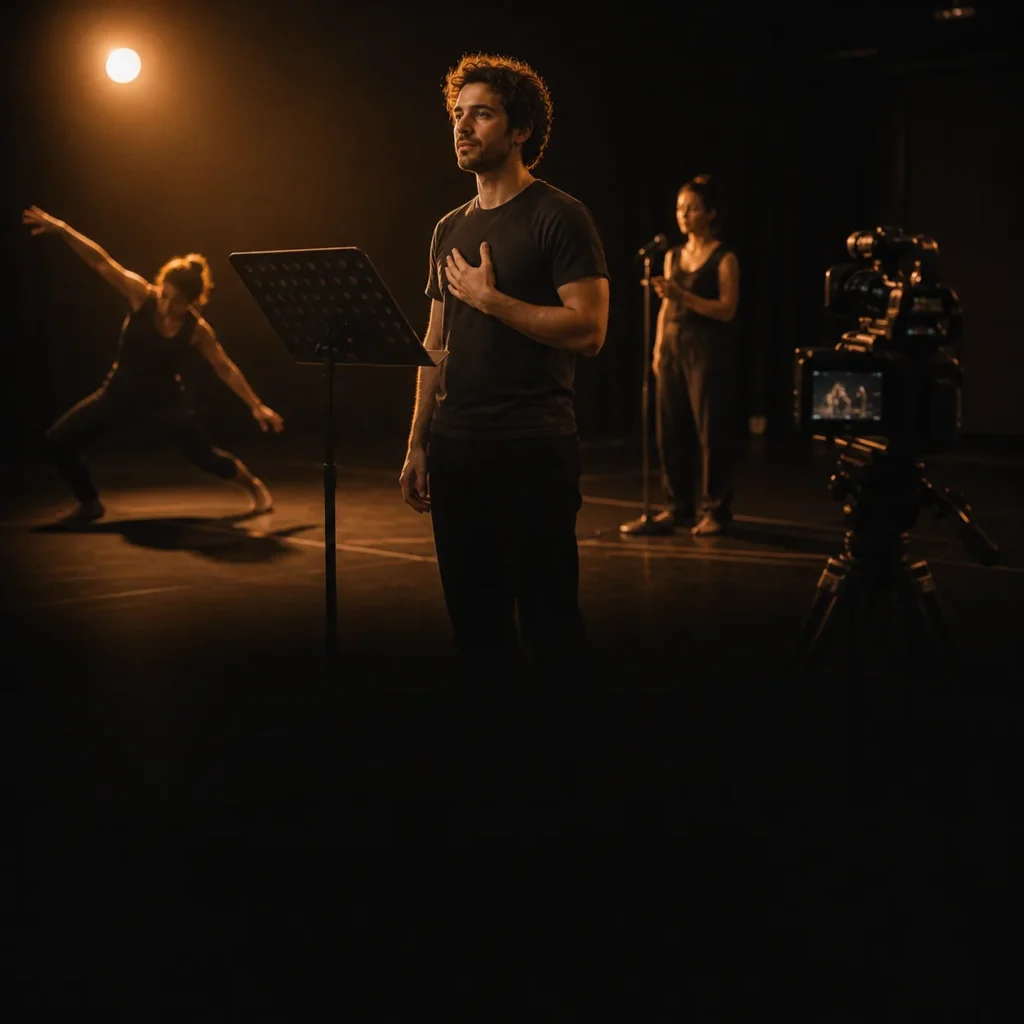
The camera does not need you to make a moment visible. It is already looking closely.
When actors feel flat on screen, the instinct is often to add more expression, more emphasis or more movement. Sometimes that works, but often it covers the very thing the camera is waiting for: a thought arriving.
The camera reads change
A neutral face is not automatically interesting, and a highly expressive face is not automatically alive. What holds attention is change connected to meaning.
You hear something. It alters your understanding. You decide whether to reveal that change. The audience watches the decision.
This is one reason screen acting can feel uncomfortable. You cannot manufacture every detail. You need enough preparation to think as the character, then enough trust to let the lens find the result.
Give your eyes a real task
Actors are sometimes told to "act with the eyes." That can produce a lot of staring. Instead, decide what you are looking for.
Perhaps you are checking whether the other person is lying. Perhaps you are searching their face for permission to leave. Perhaps you are trying to remember the last time they spoke to you that way.
The eyeline stays technically consistent, but the activity behind it changes.
Try this: the off-screen event
Frame yourself in a medium close-up. Do not use dialogue.
- Look just beside the camera at an imaginary person.
- Decide that they are holding something you recognise but did not expect to see.
- Give yourself ten seconds to work out where it came from.
- In a second take, decide the object proves they have lied to you.
- In a third take, decide it is a gift you thought had been lost forever.
- Watch the clips without sound and note the exact second the new information appears.
Avoid demonstrating the emotion. Let the problem occupy you. If you feel the urge to show the audience what is happening, return to the object and the person holding it.
Stillness must contain pressure
Stillness is useful on camera, but it is not the same as freezing. A still actor may be making a fierce decision, holding back a response or listening for danger. A frozen actor is often trying not to make a mistake.
You can test the difference by giving the body an uncompleted impulse. You want to move closer but choose not to. You want to look away but keep watching. That quiet resistance creates life without extra gestures.
What professional television taught me
Working on Winners & Losers gave me a practical education in how little the camera needs. The production around you can be large, technical and fast. Inside the frame, the work still comes down to relationship, thought and timing.
The camera is not impressed by effort. It records behaviour.
A useful playback question
Instead of asking, "Was I natural?" ask, "What was I doing to the other person?" Natural is too vague. Trying to reassure, expose, avoid or challenge someone gives the scene direction.
For more camera work, read The Two-Second Pause That Can Save a Self-Tape and The 60-Second Pre-Take Ritual for Screen Actors.
Related Actors Insights
Continue learning
Questions or corrections? Contact Moore Acting Instinct.