
Relief teaching strengthened my ability to recover, simplify instructions and stay responsive when the plan changed in front of a room.
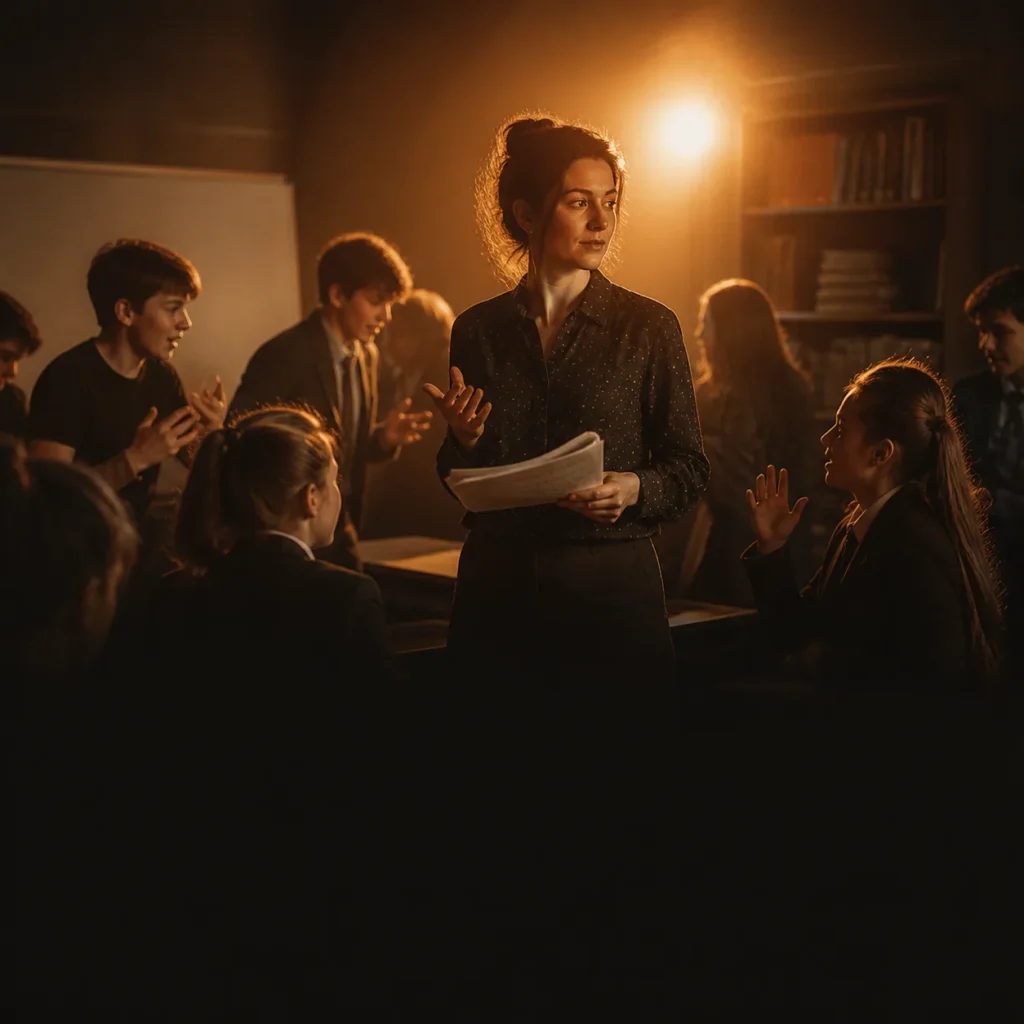
Emergency teaching and acting may look like separate jobs, but both ask you to enter a room, read what is happening and respond before you have complete control.
A lesson plan can be interrupted by a timetable change, missing equipment, a student who needs help or a group with a completely different energy from the one you expected.
A scene can be interrupted by a new direction, a technical delay, an altered line or a performance choice you did not anticipate.
The shared skill is recovery.
The plan is a starting point
Preparation matters in both rooms. Without it, adaptation becomes guesswork. The mistake is treating the plan as more important than the people in front of you.
In a classroom, the clearest activity on paper may fail because the group does not yet understand the first instruction. In a scene, the delivery you rehearsed may stop making sense when the other actor gives you something different.
Holding the plan lightly does not mean being unprepared. It means recognising when reality has supplied new information.
Simplify under pressure
When a room becomes noisy or uncertain, adding more explanation often makes things worse. A clear next action works better.
Actors can use the same principle. If a scene falls apart, return to one fact and one need.
Where am I?
What has just happened?
What do I need this person to do now?
You can rebuild from there.
Try this: the interruption rehearsal
Use a scene you know well and ask a partner to interrupt the routine in controlled ways.
- Begin the scene normally.
- On the first run, your partner drops an object halfway through. Stay in the circumstances and deal with it.
- On the second, they change their physical distance before an important line.
- On the third, they wait five seconds longer than expected before replying.
- On the fourth, continue the scene after deliberately losing your place. Do not apologise. Find the thought and recover.
This is not an exercise in sabotaging another actor. Agree on the interruptions beforehand and keep them safe.
Review which changes pulled you out of the scene and which made you more alert.
Do not advertise the mistake
When actors forget a word or miss a mark, they often show the audience that something has gone wrong before anyone else has noticed. The shoulders drop, the eyes apologise and the scene briefly becomes about the actor’s embarrassment.
Teaching helped me understand that a room takes its cue from you. If you remain clear and move to the next useful action, many disruptions become part of the flow.
On set, safety and technical accuracy come first. If a reset is required, reset. The skill is not pretending nothing happened. It is avoiding unnecessary panic.
Read behaviour, not labels
A restless class is not simply "bad." It may be confused, bored, overstimulated or waiting to see whether the adult means what they say.
A quiet scene partner is not necessarily giving you nothing. They may be withholding, protecting themselves or listening intensely.
Labels close curiosity. Behaviour gives you information.
Every room is different
Emergency teaching reminded me that authority does not come from performing certainty. It comes from noticing, communicating and following through.
The same is true in acting. You do not need to know exactly what will happen. You need enough preparation to remain useful when it changes.
That has influenced how I teach at Moore Acting Instinct and how I work on independent productions. I am less interested in a perfect first attempt and more interested in whether an actor can receive a note, adjust and return without shrinking.
For a related lesson on reading group energy, see What Emergency Teaching Taught Me About Reading a Room. For between-take recovery, read How Actors Can Recover Focus After a Bad Take.
Related Actors Insights
Continue learning
Questions or corrections? Contact Moore Acting Instinct.