
Backstory is useful when it changes behaviour. This character exercise turns research into habits, routines, status and choices the camera can actually see.
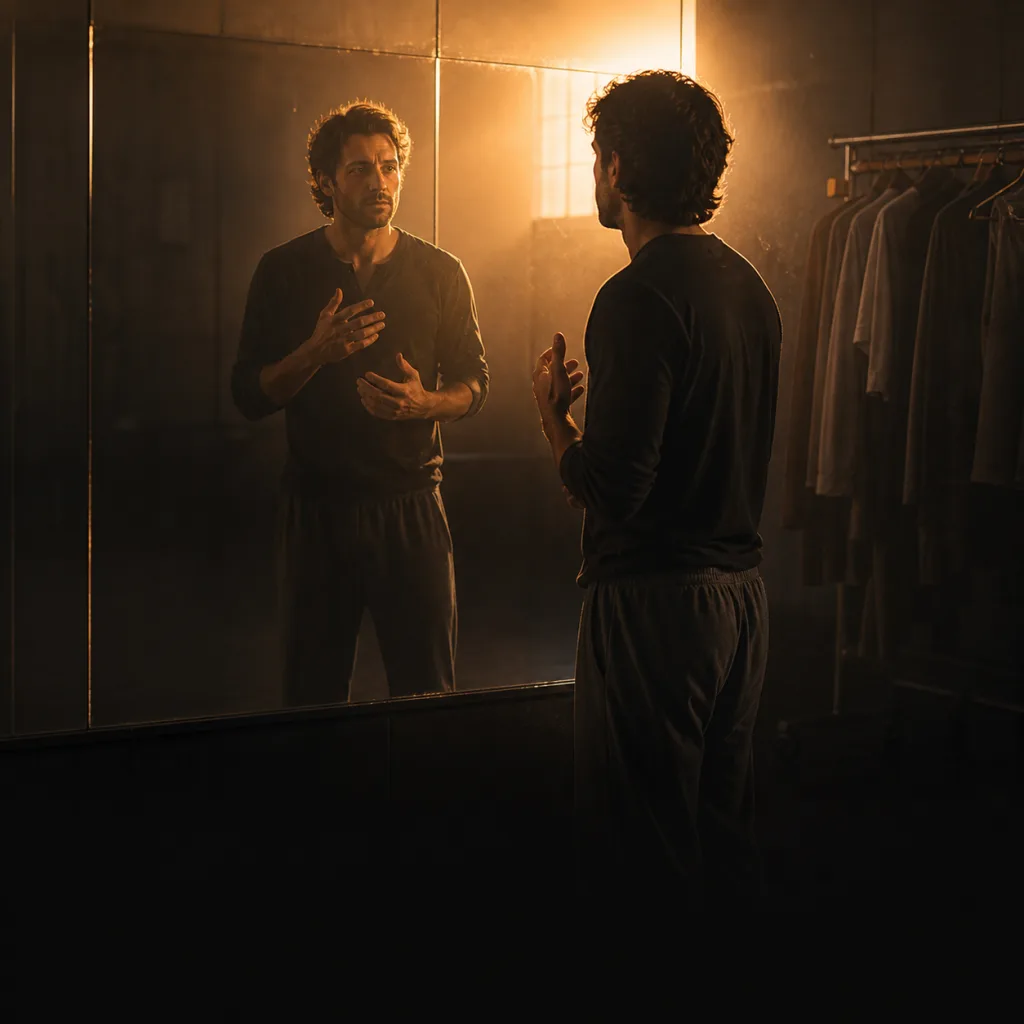
A detailed character biography can be enjoyable to write. You may know where the character went to school, what their parents did and the name of their first pet.
The question is whether any of it changes the scene.
Backstory becomes useful when it affects behaviour: how the character enters, what they notice, what they hide and what they expect from other people.
Start with repeated behaviour
Choose three things the character does often.
They may check a locked door twice, answer questions with another question, straighten objects while avoiding conflict or keep their phone face down.
Each behaviour should have a reason, but you do not need to announce it to the audience. The history lives underneath the action.
Build status through expectation
Ask what the character expects will happen when they speak. Do they assume people will listen, dismiss them, become angry or need reassurance?
Expectation shapes timing and posture more truthfully than deciding to play high or low status.
A person who expects interruption may rush, over-explain or stop before the sentence is finished. A person who expects obedience may not check whether they were heard.
Try this: the character’s first ten minutes
Imagine the character waking on an ordinary morning before the story begins.
- What is the first object they reach for?
- What part of the room do they avoid looking at?
- How do they respond to a message from somebody they love?
- What task do they complete with unusual care?
- What happens when something small goes wrong?
Film the ten-minute routine as a two-minute silent sequence. Use only a few objects. Do not indicate personality for the camera. Complete the morning as the character.
Afterwards, write down the behaviours that appeared without planning. Test one of them in the scripted scene.
Let costume and objects affect you
A costume is not decoration. Shoes alter pace. A tight collar can change breath. A bag may be protected, dropped or used as a barrier.
On an independent production such as Stashamo High, practical choices around wardrobe, props and location often gave actors immediate information. You do not need an expensive set to use this. One meaningful object can reorganise a scene.
Avoid the trauma shortcut
Not every interesting character needs a devastating secret. Sometimes the most revealing fact is ordinary: they hate being late, cannot admit they are lonely or always bring too much food.
Do not use painful personal memories simply because you believe suffering creates depth. Imagination, observation and clear circumstances are powerful tools.
Biography should answer a present question
Before adding history, ask what problem it solves in the current scene. If the character avoids touch, what does that do to this relationship now? If they grew up with money, what do they assume about this room?
Keep the details that create playable pressure. Leave the rest in the notebook.
For another way into character, read Make Stronger Acting Choices by Changing the Relationship and visit the productions page for examples of Paul’s independent screen work.
Related Actors Insights
Continue learning
Questions or corrections? Contact Moore Acting Instinct.