
A useful acting routine does not need to consume your day. This twenty-minute session trains body, voice, meaning, listening and camera work.
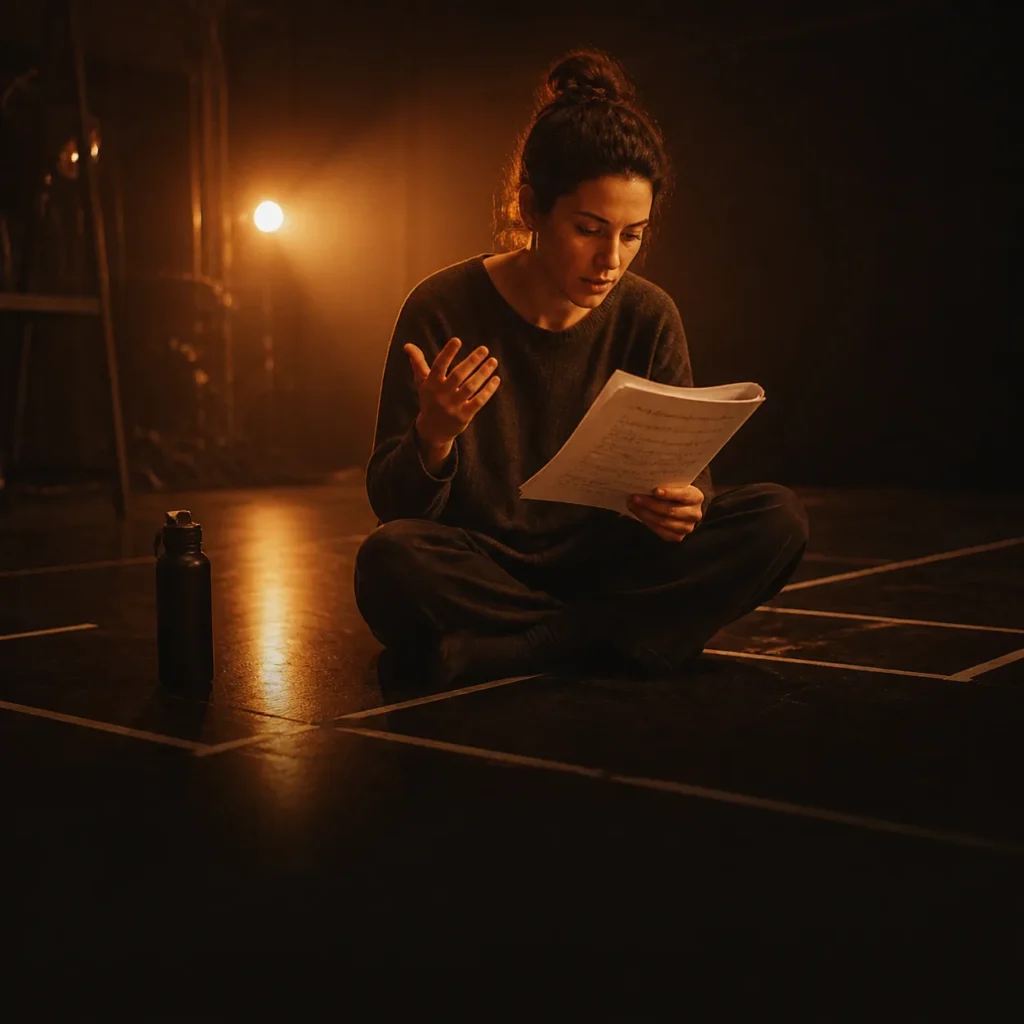
There are weeks when acting has to fit around work, family, travel and everything else. That does not mean the practice has to disappear.
A short routine can keep the instrument awake, provided each minute has a clear purpose. This is the twenty-minute session I suggest when an actor wants structure without turning training into another impossible promise.
Minutes 1 to 3: arrive physically
Stand with your feet under you and notice where you are holding unnecessary effort. Move the jaw, shoulders, ribs and hips. Do not attempt a perfect warm-up. Your task is to find out what body has arrived today.
Finish by walking the room at three different speeds. Let the eyes continue receiving the space.
Minutes 4 to 6: wake the voice
Hum gently, then move through lip trills or easy consonants. Speak a few lines while keeping the breath moving to the end of the thought.
Avoid trying to sound impressive. A warm voice is responsive, not artificially deep or loud.
Minutes 7 to 10: translate the text
Take a small section of dialogue and say it in your own words. Identify what changes from line to line.
For each line, complete this sentence: "I say this now because…"
Return to the written words only after the meaning is clear.
Minutes 11 to 14: train the listener
Ask a friend or recording to read the other lines. On each cue, delay your response until you can name what changed for your character.
You are not adding pauses. You are preventing the memorised cue from bypassing the event.
Minutes 15 to 18: one camera experiment
Choose one variable for the take:
- a different relationship
- a physical task
- a secret you are protecting
- a change in distance from the reader
- a stronger reason to avoid the subject
Record one take. Do not stop for a minor mistake.
Minutes 19 to 20: take one useful note
Watch the recording once and write one observation. Keep it practical. "My eyes dropped before every difficult line" is useful. "I looked terrible" is not.
Decide what you will test tomorrow and finish.
Try this for two weeks
Use the same piece of text for the first seven days. In the second week, switch material but keep the routine. This separates growth in the process from novelty in the script.
At the end, compare day one and day fourteen. Look for clearer thought, more available listening and less panic around recording.
A routine should support the work, not become the work
Actors can become very good at preparing to act. Warm-ups, journalling and analysis are valuable until they become a way to postpone the scene.
That is why this routine ends with a take. Every session crosses the line from preparation into action.
You can adapt it around an audition or a class at Moore Acting Instinct. For a lighter daily approach, read Five Acting Habits That Improve Your Work Between Classes.
Related Actors Insights
Continue learning
Questions or corrections? Contact Moore Acting Instinct.