
Directors value actors who can listen, adjust, repeat technical actions and remain collaborative. These four habits can be trained before the next set.
Being talented is useful. Being directable is what allows a production to keep using that talent.
A film set has limited time and many moving parts. Directors need actors who can protect the scene while responding to technical and creative changes. That does not mean becoming passive. It means making clear choices without becoming attached to one version.
1. Hear the note before defending the take
An actor may have a good reason for a choice. The director may still need something else for story, edit or tone.
Listen to the whole note. Repeat the practical part back if needed. Then try it before explaining why the previous version worked.
A clear attempt gives everyone information.
2. Keep emotional life inside technical repetition
Screen work may require the same action across several angles. Pick up the cup on the same phrase, turn at the same point and protect the eyeline.
Continuity is not the enemy of spontaneity. It creates a structure inside which the emotional response can stay alive.
Practise repeating one physical sequence while allowing the reader to vary their timing.
3. Make adjustments playable
"Less" and "more" can be difficult notes. Translate them into behaviour.
"Less angry" might become "Do not let them know they have hurt you." "More urgency" might become "Stop them reaching the door."
Playable adjustments give your attention a task instead of asking you to manufacture a result.
4. Stay collaborative between takes
Professionalism is often visible in small moments. Know when sound needs quiet, return props correctly, listen for the reset and avoid turning every break into a discussion about your performance.
The set is a shared workplace.
Try this: the four-direction test
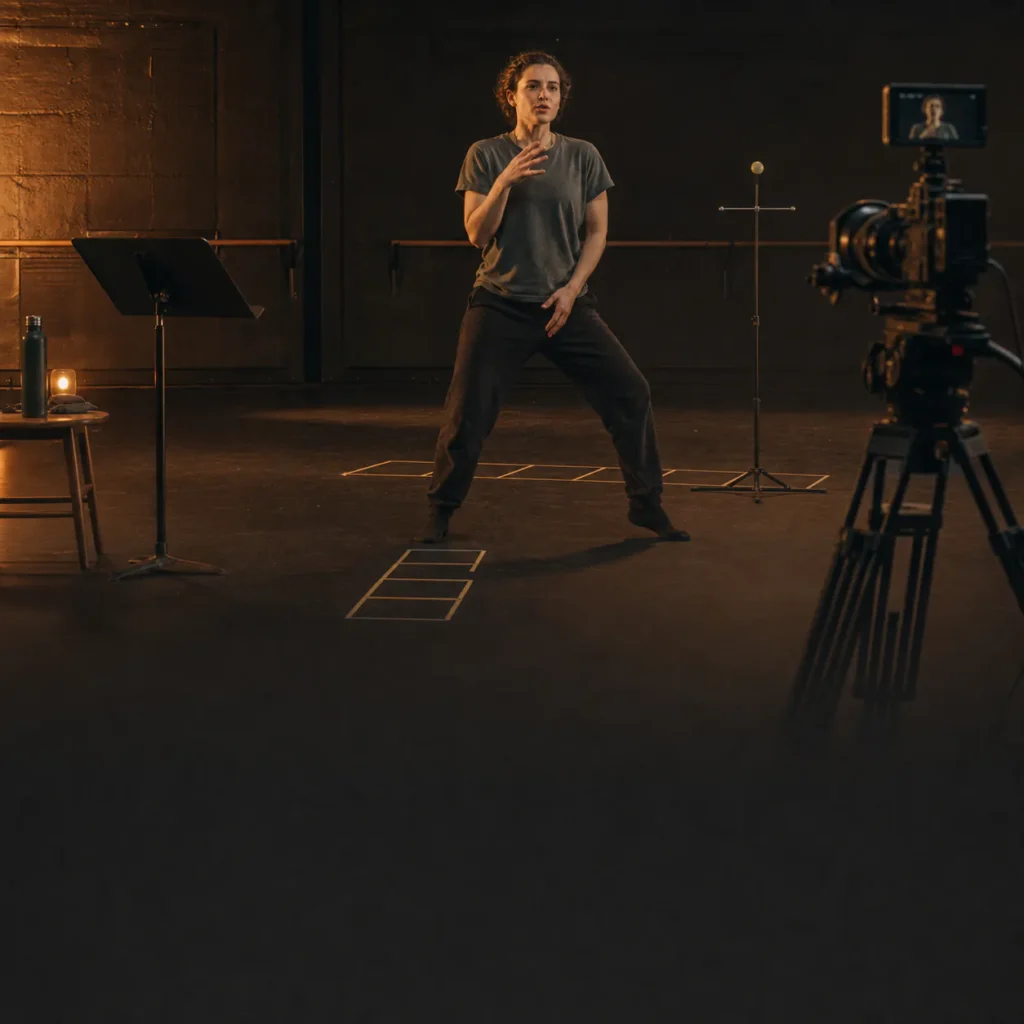
Film the same thirty-second scene four times. Ask a reader or friend to give you one direction before each take:
- hide the urgency
- protect the other person
- increase the physical distance
- behave as though this conversation has happened before
Give yourself no more than twenty seconds to prepare each adjustment. Keep the lines and basic blocking consistent.
When reviewing, check whether each version is clearly different without looking like a demonstration of the note.
Ask useful questions
A useful question is short and connected to action. "Do I know this before I enter?" or "Should I cross before that line?" helps the work.
A long question that contains your preferred answer may slow the process.
Directability does not remove your voice
Collaborative actors still bring ideas. The difference is that they offer them in service of the scene and can let them go.
Working across acting, producing and directing has made this very clear to me. The people you want back are prepared, specific, kind under pressure and able to adjust.
For more set preparation, read What Young Actors Often Miss: Professionalism Is Part of the Craft and explore Paul Moore’s productions.
Related Actors Insights
Continue learning
Questions or corrections? Contact Moore Acting Instinct.