
A useful acting class should build repeatable skills, creative courage, professional habits and a clearer understanding of how you work.
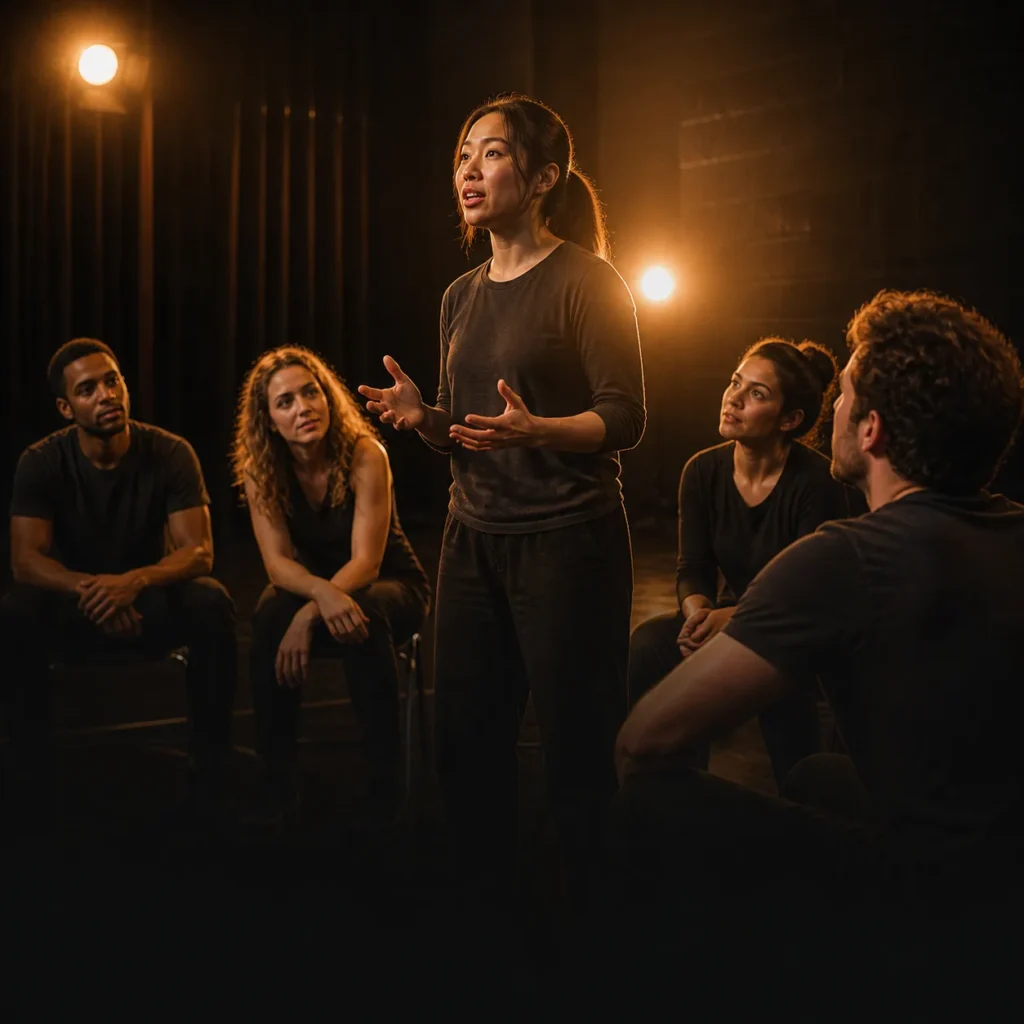
An acting class should do more than make you feel inspired for two hours. It should leave you with something you can use when the teacher is no longer in the room.
That does not mean every class needs to produce an immediate breakthrough. Acting develops through repetition, uncertainty and discovery. It does mean the training should gradually increase your choices.
A practical language for the work
Actors need a way to discuss scenes without hiding behind vague words.
"Make it stronger" is not very helpful. "Stop them from leaving without admitting you need them" gives you an action, a relationship and a problem.
A good acting school or teacher should help you translate broad ideas into playable behaviour.
Permission to experiment
Training is one of the few places where an actor can try an idea that may fail without costing a production time and money.
That freedom matters. If every exercise becomes an attempt to earn praise, the actor learns to repeat safe choices.
A useful class creates enough structure for people to take risks without humiliation.
Feedback you can act on
Feedback should be specific, proportionate and connected to the material. It may identify a habit, offer a different action or ask a question the actor has avoided.
The actor also needs a chance to apply the note. Hearing twenty observations without another attempt can produce understanding without skill.
Camera awareness without self-obsession
For screen acting, students should learn framing, eyelines, continuity, slates, readers, self-tape sound and how different shot sizes affect behaviour.
Technical awareness should free the performance. It should not turn the actor into a camera operator inside their own head.
A respectful approach to boundaries
Training can involve emotional material, but nobody needs to disclose private trauma to prove commitment. A class should make expectations clear and allow actors to question, pause or adapt an exercise.
Safety is not the opposite of courage. Choice allows courage to be real.
Try this: the class value audit
After your next four classes, divide a page into five columns:
- Skill practised
- Note received
- Chance to apply it
- What changed
- What I can practise alone
Complete one row after each session.
At the end of the month, look for balance. Are you learning different skills? Are notes becoming more precise? Can you explain what you are practising between classes?
Do not judge a class by whether every session felt comfortable or exciting. Judge whether the work is becoming clearer and more independent.
Collaboration, not imitation
A teacher’s taste will influence a room, but students should not all begin sounding and moving alike. The goal is not to produce a house style of human being.
At Moore Acting Instinct, I want actors to become more specific versions of themselves while gaining the flexibility to enter different stories.
That involves challenge. It also involves listening to what each actor already brings.
Professional context
Classes should help actors understand the working environment around the performance: preparation, punctuality, taking direction, file delivery, communication, consent and the difference between training material and confidential production material.
Talent is important. Being ready to work with other people is equally important.
You should leave with questions
Good training does not remove all uncertainty. It gives you better questions.
What changed me in that take? Where did I stop listening? Which action created behaviour? What happened when I trusted the silence?
Those questions can continue working long after the class ends.
Explore my current acting classes and courses in Geelong and online, or read the Actor FAQ for practical information about training and self-tapes.
Related Actors Insights
Continue learning
Questions or corrections? Contact Moore Acting Instinct.