
A useful pre-take ritual should be brief enough for a real set and specific enough to reconnect the actor with body, relationship and first thought.
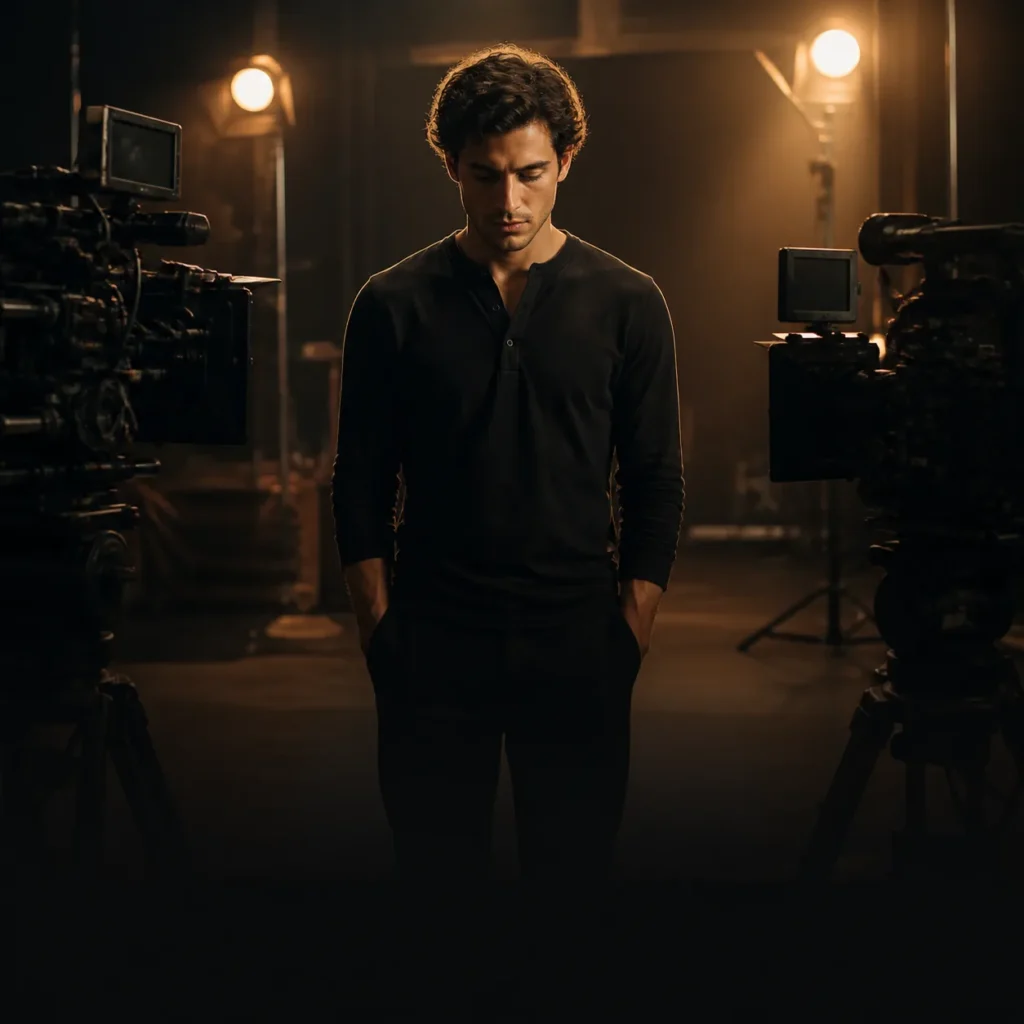
A pre-take routine should help you enter the scene. It should not become a ceremony that only works when the room is silent, the lighting is perfect and everybody gives you five minutes.
Professional sets move. Self-tapes can also become pressured when equipment, time or nerves take over. I prefer a ritual that can survive real conditions.
This one takes sixty seconds and has four parts.
Seconds 1 to 15: release unnecessary work
Notice three places where you are adding effort. Common areas are the jaw, tongue, shoulders, hands and stomach.
Do not try to become completely relaxed. Release only the tension that is not helping the circumstances.
Your character may be tense. That tension still needs shape and purpose. The aim is to remove the actor’s extra gripping.
Seconds 16 to 30: locate the relationship
Look towards the reader or eyeline and complete one sentence silently:
"Right now, I need you to…"
Use a playable action such as believe me, forgive me, leave, stay, admit it or stop worrying.
Avoid an outcome about the audition, such as "I need you to think I am good." The target belongs inside the scene.
Seconds 31 to 45: receive the first fact
Choose one thing that has already happened before the scene begins. Let it become a present thought.
"I heard you on the phone."
"You did not come home."
"This is the last time I can ask."
Do not perform the thought. Give yourself a second to believe it matters.
Seconds 46 to 60: check the practical frame
Confirm the essentials: eyeline, first mark, prop, sound and whether the recording has started.
Then stop checking.
Technical preparation is useful until the scene begins. After that, let the equipment do its job.
Try this: disturb the ritual
Practise the routine under three conditions.
- Use the full sixty seconds in a quiet room.
- Use thirty seconds while a partner moves equipment nearby.
- Use ten seconds after somebody gives you a new direction.
Keep the same four priorities: release, relationship, first fact, frame.
The shorter versions show which parts you actually need. They also prevent the ritual becoming dependent on ideal conditions.
Do not use the ritual to test your feelings
If you finish and ask, "Do I feel ready now?" you may return to self-monitoring.
The ritual is complete when you have reconnected with the scene, not when anxiety has disappeared.
I learned this through my own experience with panic and through years of acting, teaching and making work. Waiting for certainty can consume the moment. A simple task gives you a way to begin.
Adapt it to the character
The physical release may change from scene to scene. A character hiding anger may need to release the jaw while keeping the feet firmly planted. A character trying to appear casual may need to let the hands become available.
The structure remains, but the details should serve the circumstances.
After "action"
Do not demonstrate the preparation. Let the first event reach you and start from there.
The audience does not need to see your ritual. They need to see a person who has arrived with something at stake.
For audition nerves, read Give the Adrenaline a Job. For resetting after a difficult take, read How Actors Can Recover Focus After a Bad Take.
Related Actors Insights
Continue learning
Questions or corrections? Contact Moore Acting Instinct.