
Acting develops attention, communication, emotional range and the ability to remain present when a situation is uncertain.
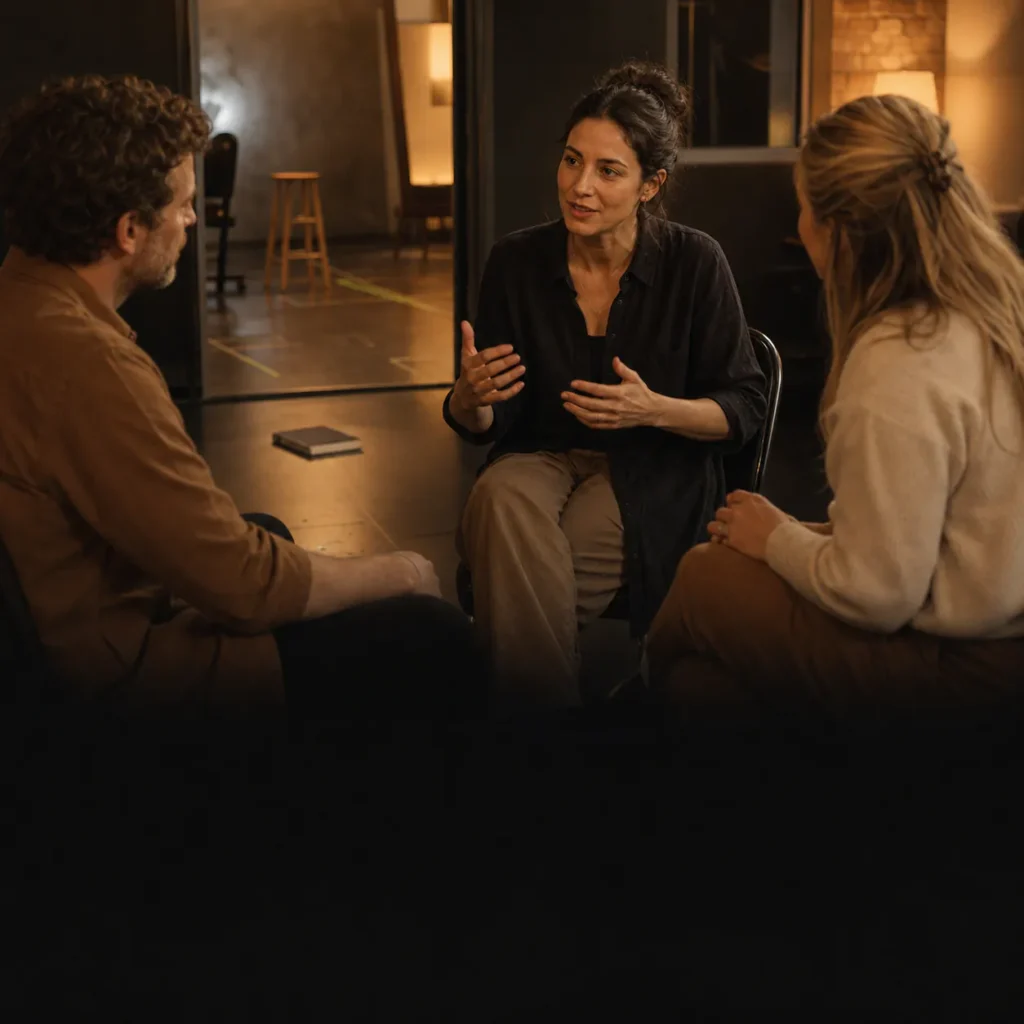
Not everybody who takes an acting class wants a lifelong career on screen or stage. Some people want confidence. Some want a creative outlet. Others want to communicate more clearly, understand behaviour or become less frightened of being seen.
Those are not lesser reasons to train.
Acting is a craft and a profession, but many of its core skills travel well beyond an audition room.
Listening without preparing your defence
Scene work exposes how quickly we stop listening. We hear enough to plan a response, then wait for our turn.
An acting exercise asks you to let another person’s words alter you before you speak. That skill matters in relationships, teaching, leadership and any difficult conversation.
You do not have to agree with someone to receive what they are actually saying.
Communicating an intention
Actors learn that words and intention are not the same thing. "I’m fine" can reassure, dismiss, protect, warn or end a conversation.
Understanding intention helps you communicate more clearly in daily life. What are you trying to achieve with the person in front of you? Is your behaviour helping?
Tolerating uncertainty
A live scene cannot be completely controlled. Another actor may change pace, an audience may respond unexpectedly, or a prepared moment may not arrive.
Training teaches you to stay involved without knowing the exact result.
For somebody who has struggled with anxiety, that lesson matters to me. I do not need certainty before I participate.
Seeing more than one point of view
Character work asks you to understand behaviour without immediately approving or condemning it. You search for the logic that makes the person’s choices possible.
That does not erase responsibility. It develops perspective.
The exercise can make us more curious about people whose decisions differ from our own.
Try this: the ordinary scene study
Choose a routine interaction from your week, such as ordering coffee, asking for help or speaking to somebody at work.
- Write the conversation as accurately as you remember it.
- Under each line, write what the speaker may have wanted from the other person.
- Create two alternative explanations for any behaviour you initially judged.
- Perform the exchange with a partner, changing only the underlying intention.
- Notice how the same words create different relationships.
This is not about analysing strangers as characters. It is practice in recognising that behaviour can carry more than one meaning.
Becoming comfortable with visibility
Acting can help people tolerate being watched, heard and occasionally misunderstood. That confidence does not come from pretending not to care. It comes from repeated experiences of standing up, making a choice and surviving an imperfect result.
The lesson is useful in interviews, presentations, classrooms and difficult conversations.
Play is serious training
Adults often remove play from their lives unless it has a measurable outcome. Acting gives imagination a practical job. You enter another set of circumstances, test behaviour and discover responses that planning alone would not produce.
Play is not the absence of discipline. It is one way human beings learn flexibility.
A career can still be the goal
None of this diminishes professional ambition. Actors need technique, persistence, industry knowledge and strong material. The wider life skills may actually support that career by making the person more observant, collaborative and resilient.
At Moore Acting Instinct, I teach people with different goals. The common ground is a willingness to pay attention, take a creative risk and learn from what happens.
Read What Good Acting Classes Should Actually Give You or visit the acting classes and courses page to see how the training is structured.
Related Actors Insights
Continue learning
Questions or corrections? Contact Moore Acting Instinct.