
This month-long challenge uses a phone camera and carefully limited AI prompts to build consistency, camera awareness and independent rehearsal skills.
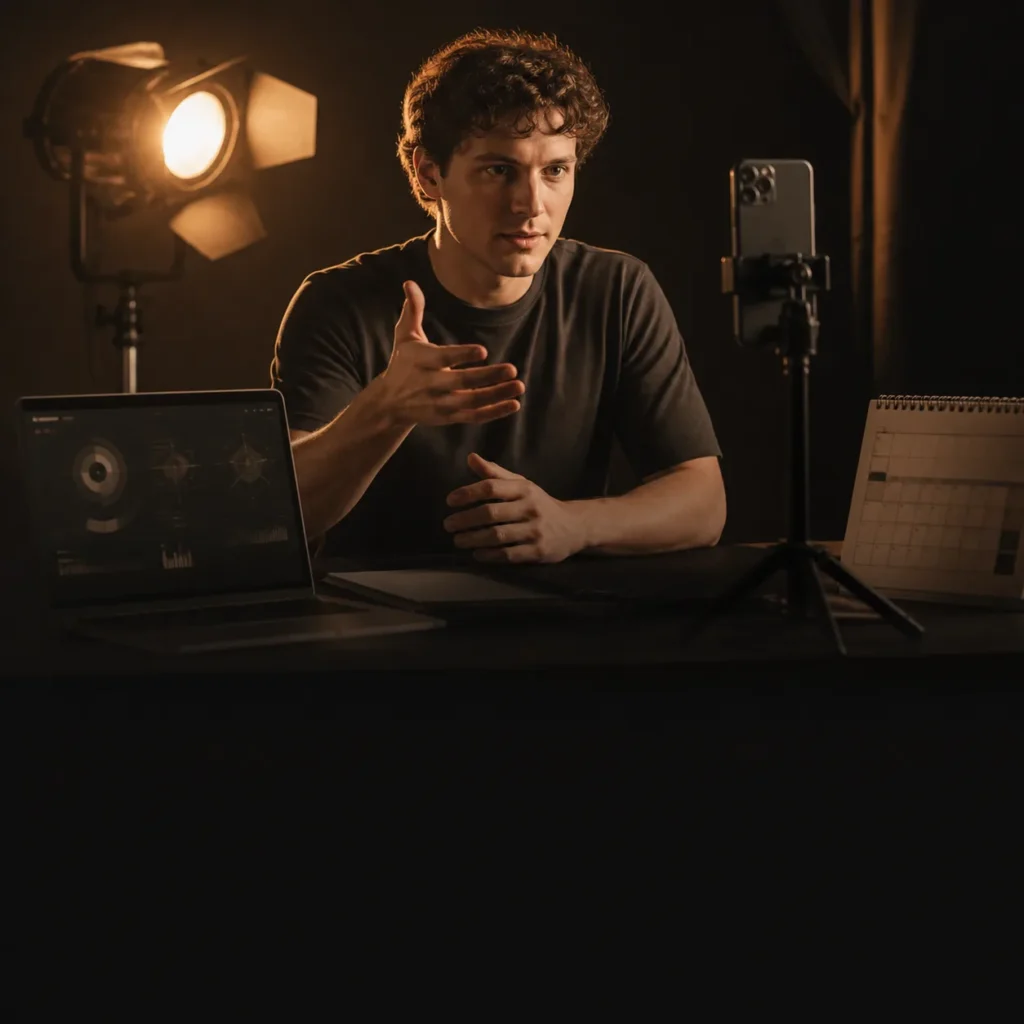
You do not need a new piece of equipment every time you want to improve on camera. A phone, a quiet space and a clear plan are enough to learn a great deal.
AI can help with structure, but it should not become the director, acting teacher and audience inside your head. In this challenge, the technology has narrow jobs. You make the creative decisions.
Do not upload confidential audition sides, private information or unreleased scripts to a public AI service without permission and an understanding of its settings.
The rules
Record for no more than twenty minutes a day. Keep every take private unless you choose to share it. Use material you own, public-domain text, a script written for the exercise or one of the free acting scripts.
Create four folders: Week 1, Week 2, Week 3 and Week 4. Name files by date and task.
Week 1: learn what the camera sees
Days 1 to 3
Record the same thirty-second monologue in wide shot, medium shot and close-up. Change nothing deliberately. Notice how much movement and facial effort each frame needs.
Days 4 to 5
Repeat the close-up while placing attention on three different targets: the reader’s eyes, a sound beyond them and a memory connected to an object.
Days 6 to 7
Ask an AI tool to generate ten playback questions about eyeline, pace, stillness and thought. Choose only two questions and review the week’s clips.
Week 2: create variation
Days 8 to 10
Use one short scene. Ask AI for five possible obstacles that do not alter the written facts. Reject three and test the remaining two.
Days 11 to 12
Play the scene with two contrasting actions, such as reassure and expose. Avoid asking the tool how the character should feel.
Days 13 to 14
Record a final version using the option that created the clearest relationship. Write why you chose it.
Week 3: work with interruption
Days 15 to 17
Use a live reader or record the other lines with different pauses. Practise receiving timing you did not control.
Days 18 to 19
Introduce one safe physical task, such as packing a bag or sorting papers. Let the task become harder when the relationship changes.
Days 20 to 21
Ask AI to list common technical self-tape errors. Verify the advice against a reputable casting brief or training source, then check framing, sound, background and file naming.
Week 4: finish something
Days 22 to 24
Choose the scene that taught you the most. Rehearse it without AI and write your own preparation in five lines or fewer.
Days 25 to 27
Record no more than three takes per day. Give each take one different action, not a different emotion.
Days 28 to 29
Select the strongest take. Make only necessary edits. Do not cover weak acting with music, effects or rapid cutting.
Day 30
Watch the first and final clips. Write one page answering:
- What became more specific?
- Which habit kept returning?
- What did the camera notice that I did not feel?
- Which exercise will I continue for another month?
Try this: ask AI to disagree with you
One useful prompt is to ask for three reasons your interpretation may be incomplete. Treat the answers as questions, not facts.
This prevents the tool from simply confirming your first idea. You still decide whether any suggestion belongs in the script.
Keep authorship of the work
AI can organise a challenge, create neutral practice material and offer alternative questions. It cannot know your lived response, your scene partner or the exact effect of a choice on camera.
The final acting needs your taste, judgement and willingness to be present.
For more on responsible rehearsal use, read Using AI as a Rehearsal Partner Without Letting It Act for You and AI Tools for Actors.
Related Actors Insights
Continue learning
Questions or corrections? Contact Moore Acting Instinct.